
APS 2026 Council Election
APS Active Members are encouraged to participate in shaping the future of the Society by casting a vote for the incoming APS President-elect. All Active Members will receive a unique email from Survey Monkey to cast his or her vote. If you did not receive an email, please check your junk or spam folder for a message from: info@aps1888.org via SurveyMonkey <member@surveymonkeyuser.com>
Thank you for your participation in this year’s election!
President-elect Candidates
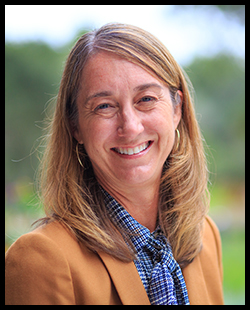
Lisa Chamberlain, MD, MPH
Professor of Pediatrics
Associate Chair, Policy and Community Engagement
Director, Office of Child Health Equity
Stanford University, School of Medicine
Personal Interest Statement
My interest in this role stems from my deep commitment to the well-being of children and my belief that APS has a unique role to play on behalf of our nation’s children.
I was drawn to APS and its Advocacy Committee believing that the APS’ advocacy influence was an untapped “grass-tops”, senior pediatric voice that could inform the national dialogue on behalf of pediatrics and children. As the Advocacy Co-Chair I have led us to rename the committee, revamp our mission and charge, and expand membership. With a larger group we formed two workgroups to 1) defend science and 2) protect Medicaid, both are incredibly productive. As an APS Councilor, I help steer our investment in infrastructure to advocate: we purchased a software platform to enable mapping our members, facilitating targeted outreach in critical districts at pivotal moments. At the Board’s request, I lead a novel coalition (CHA, AAP, APA, SPR, APA & CPMR) to align our voices in defending funding for child health research at the NIH, strategically stepping in where we saw a void to our mission to advance academic pediatrics and elevating APS’ role nationally.
As Associate Chair of Policy and Community Engagement at Stanford, I successfully led strategic initiatives for over 1,000 faculty and staff, developing skills in stakeholder engagement, resource allocation, and change management that directly translate to the challenges facing academic pediatrics today. In my role with the AAP, I co-founded the California Statewide Pediatric Training Collaborative, uniting faculty across the state’s 14 training programs, together training over 800 residents a year on the intersection of child health and child poverty, now replicated in 9 states. This work has been acknowledged by many awards, including the APA Advocacy Award and the 2025 George Armstrong Lecture Award at PAS.
I believe I would be an effective and bridge-building APS President, navigating the current moment and strengthening our shared mission.
Brief Bio
Medical Education and Postgraduate Training
- 1992–1996 — M.D., University of Arizona
- 1996–1999 — Residency in Pediatrics, Lucile Packard Children’s Hospital, Stanford University
- 1999–2000 — M.P.H., University of California, Berkeley
- 2000–2003 — General Academic Pediatrics Fellowship, Combined UCSF–Stanford University Program
Faculty Appointments
- 2003–2007 — Clinical Instructor of Pediatrics, Stanford University
- 2007–2014 — Assistant Professor of Pediatrics, Stanford University
- 2014–2019 — Associate Professor of Pediatrics, Stanford University
- 2019–Present — Professor of Pediatrics, Stanford University
- 2021–Present — Professor by Courtesy, Stanford Graduate School of Education
- March 1, 2026 — Pediatric Department Chair, University of Arizona School of Medicine
- March 1, 2026 — Director, Steele Research Institute, University of Arizona College of Medicine
Current Positions
- Associate Chair, Policy & Community Engagement, Department of Pediatrics, Stanford University
- Founder & Director, Office of Child Health Equity, Department of Pediatrics, Stanford University
- Associate Faculty Director, Center on Early Childhood, Stanford University Graduate School of Education
Society and Committee Memberships
American Academy of Pediatrics
Member | 1996–Present
Chapter / District IX
- Advocacy Committee — Co‑founder & Chair (2004–2015)
- State Government Affairs Committee — Alternate Member (2005–2006)
National Involvement
- Community Pediatrics Training Initiative
- Defining Community Pediatrics Competencies (2007–2009)
- Transforming Pediatric Residency — National Coach (2011–2018)
- Committee on Child Health Financing (2022–Present)
Academic Pediatric Association
Member | 2004–Present
- Advocacy Training Special Interest Group — Co‑Chair (2004–2007)
- National Public Policy Committee (2009–Present)
- National Nominating Committee — Member (2013–2015)
- Childhood Poverty Task Force — Chair (2013–2016)
- Education Task Force — Chair (2013–2016)
American Pediatric Society
Member | 2020–Present
Association of Medical School Pediatric Department Chairs (AMSPDC)
- Pediatric Workforce Initiative Subcommittee — Co‑Chair (2025–Present)
American Pediatric Society Service
- 2021–2027 (term) — Co‑Chair, Advocacy Policy Committee
- 2023–2028 (term) — Elected to National Board, Councilor
- 2023–Present — APS Liaison to the Pediatric Policy Committee
- 2023–Present — APS Liaison to AAP Committee on Federal Government Affairs
- 2025–Present — Chair, NIH Advocacy Workgroup (Convening AAP, CHA, APA, SPR, AMSPDC, and CPMR)
Areas of Research Interest
My scholarly work focuses on the drivers of pediatric health inequities, focusing on the non-clinical factors and social determinants of health contributing to health disparities. I engage in both community-engaged and health services research. My foundation is the partnerships I have developed with non-profit organizations, schools, local government and public health systems over 20 years. I have three active areas of inquiry. First, I am currently leading a large RCT of community health workers to explore their role in early childhood health and development. This study engages team science: it was informed first by parent voices and then co-developed with five large county-based stakeholders and brings together pediatricians, health economists, epidemiologists and child psychologists in the evaluation. Second, in my role at the Stanford Graduate School of Education, I work to develop interventions to support early childhood development leveraging technology. Our work, funded by the NSF, explores the intersection of school readiness and pediatric practice, where we can reach and change the trajectory of the most at-risk children by addressing educational disparities in the 0-5 years. Third, I have conducted health services work since 2010, exploring pediatric health disparities across a wide range of complex conditions for California children using large state databases. I was able to translate my research to inform California’s Title V program while I served as the Child Health Policy fellow for the California Senate Health Committee from 2014-2016. The Covid pandemic disrupted care utilization for children with medical complexity, opening telehealth as a novel access mode. We received a HRSA “Center of Excellence COVID” grant to explore the telehealth transformation on child health inequities for children with medical complexity. While my methods vary, the unifying factor is to address child health inequities through action-oriented, rigorous science.
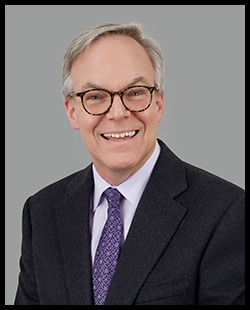
Matthew M. Davis, MD, MAPP
EVP, Enterprise Physician-in-Chief and Chief Scientific Officer
Nemours Children’s Health
Professor of Pediatrics
Mayo Clinic Alix School of Medicine
Personal Interest Statement
I am humbled to be nominated to serve as American Pediatric Society President-Elect. I have been a member of APS since 2018, and my experiences as a leader — including serving APS as Co-Chair and Member of the Policy and Advocacy Committee — inform what I believe can be accomplished by our organization.
If elected, I would partner with the members of APS to focus efforts in 3 main areas:
- APS members have been responsible for an extraordinary array of scientific ambitions and accomplishments in their careers. I believe that we may underestimate APS members’ potential to shape future child health research in the decades ahead. I will ensure that APS creates opportunities to catalyze the insights and imagination of APS members, as we shape the future of scientific inquiry.
- APS leaders have formulated the 2025-2029 APS Strategic Plan. Pursuing the plan will engage APS members and amplify the international relevance of APS. I will partner with APS leaders to pursue the ambitious vision of the Strategic Plan.
- Specifically within the Strategic Plan, I will concentrate on “Confronting Child Health Crises”, because I believe that APS is positioned to lead the pediatric community in setting a timely action agenda in science for this moment in APS history:
… (a) To develop a priority list of scientific approaches to address predominant causes of child morbidity and mortality;
… (b) To propose pragmatic legislative and executive actions at state and federal levels to improve child health, aware of current policy context while also relentlessly elevating the importance of child survival and well-being; and
… (c) To solicit philanthropic funding from major donors, which will help APS serve as a new steady source of funding for child health research.
While APS may not be the only organization that can accomplish these goals, I believe that APS is the best positioned to pursue them.
Brief Bio
Professional Education
- Harvard Medical School (1990–1994)
M.D., cum laude, 1994
Boston, Massachusetts - Irving B. Harris School of Public Policy Studies, University of Chicago (1999–2000)
M.A.P.P., 2000
Chicago, Illinois
House Staff Training
- Internship in Internal Medicine and Pediatrics (June 1994 – June 1995)
Children’s Hospital and Brigham & Women’s Hospital
Boston, Massachusetts - Residency in Internal Medicine and Pediatrics (June 1995 – June 1998)
Harvard Combined Residency in Medicine and Pediatrics
Boston, Massachusetts
Fellowship Training
- Robert Wood Johnson Foundation Clinical Scholars Program (July 1998 – June 2000)
University of Chicago
Chicago, Illinois
Faculty Positions
- July 2000 – February 2002 — Lecturer in Pediatrics and Communicable Diseases and Internal Medicine, University of Michigan
- February 2002 – August 2006 — Assistant Professor in Pediatrics and Communicable Diseases and Internal Medicine, University of Michigan
- January 2004 – September 2006 — Assistant Professor of Public Policy, Gerald R. Ford School of Public Policy, University of Michigan
- September 2006 – August 2013 — Associate Professor of Pediatrics and Communicable Diseases, Internal Medicine, and Public Policy, University of Michigan
- September 2013 – June 2016 — Professor (with tenure) of Pediatrics and Communicable Diseases, Internal Medicine, and Public Policy, University of Michigan
- January 2014 – June 2016 — Professor of Health Management and Policy, School of Public Health, University of Michigan
- July 2016 – October 2023 — Professor of Pediatrics (with tenure), Feinberg School of Medicine, Northwestern University
- December 2016 – October 2023 — Professor of Medical Social Sciences, Feinberg School of Medicine, Northwestern University
- February 2017 – October 2023 — Professor of Medicine, Feinberg School of Medicine, Northwestern University
- February 2017 – October 2023 — Professor of Preventive Medicine, Feinberg School of Medicine, Northwestern University
- October 2025 – Present — Professor of Pediatrics, Mayo Clinic Alix School of Medicine
Current Position
Executive Vice‑President, Enterprise Physician‑in‑Chief & Chief Scientific Officer
Nemours Children’s Health
Society Memberships
- Society for Medical Decision‑Making (1999–2016)
- Ambulatory Pediatric Association / Academic Pediatric Association (2000–Present)
- Association of Teachers of Preventive Medicine (2001–2010)
- AcademyHealth (formerly Association of Health Services Research and Health Policy) (2001–2016)
- American College of Physicians / American Society of Internal Medicine (2002–2016)
- Society for Pediatric Research (Elected) (2004–Present)
- American Pediatric Society (Elected) (2018–Present)
Previous Service and Involvement in American Pediatric Society
Upon election to the American Pediatric Society in 2018, Dr. Davis volunteered to serve on the APS Advocacy Committee and was subsequently appointed Co‑Chair with Dr. David Keller for three years. Over six years of service—later continuing under the renamed Policy and Advocacy Committee—the committee addressed complex pediatric policy challenges.
Highlights include advising APS on pediatric subspecialty workforce initiatives and successful advocacy supporting federal pediatric subspecialty loan repayment legislation, as well as post‑enactment program improvements. Dr. Davis co‑authored a publication with Drs. Keller and Gary Freed on this topic (Pediatric Research, 2020; 87(7):1151–1152; PMID: 32294663).
Subsequently, with Dr. Lisa Chamberlain and former APS President Dr. Mary Leonard, Dr. Davis published a national call to action supporting research to address deeply concerning trends in infant, child, and adolescent mortality in the United States (Pediatric Research, 2024; 96(2):274–276; PMID: 38961166).
Areas of Research Interest
As a physician-scientist concentrating on health system improvement, population health, and health policy, child health research has been the enduring focus of my career and has provided the opportunity to serve in a series of leadership roles.
Following my fellowship training as a Robert Wood Johnson Foundation Clinical Scholar at the University of Chicago, the Academic Pediatric Association (formerly the Ambulatory Pediatric Association) was the first pediatric research society in which I engaged with my peers, beginning in 2000. In 2004, as a faculty member at the University of Michigan, I was elected to the Society for Pediatric Research and proceeded to engage with members of both the APA and SPR. As I partnered with colleagues on multiple research initiatives, I also participated chiefly in APA and SPR as a research mentor to junior scholars who were beginning their careers as fellows or launching their faculty efforts. I was honored to be recognized in my mentoring role with the National Fellow’s Research Award in 2012 from the APA, and the Douglas K. Richardson Award for Lifetime Achievement in Perinatal and Pediatric Health Services Research from SPR in 2023 – the latter for the impact of my own research and also reflecting my mentorship of approximately two dozen scholars as they established themselves as investigators in their careers.
As a scientist, I have pursued analytic questions grounded in principles of equity since I began in vaccine policy research as a junior faculty member and then progressed to insurance-focused projects and the function of hospitals and health systems serving historically disadvantaged populations. I also concentrated on equity as a mentor and a university research leader, determined to facilitate equitable access for individuals and populations to participate in research related to their health. My focus on advancing population health led to my leadership role in public service as the Chief Medical Executive for the State of Michigan from 2013-2015 (akin to the surgeon general in other states). Subsequently, I served as one of 5 members of the Flint Water Advisory Task Force that called for specific remediation actions following the Flint water crisis. Later, I served as a member of the Working Group on Water-Related Science and Technology for the national Council of Advisors on Science and Technology under President Barack Obama. Then in Chicago, as department chair and founding director of a community health institute at Lurie Children’s Hospital affiliated with Northwestern University, I was responsible for establishing and implementing the institution’s community health implementation plan – the foundation for which is health equity. Related to those activities, I was appointed by the Mayor of Chicago to serve on the city’s Board of Health.
In 2023, I was recruited by Nemours Children’s Health to my current role as executive vice-president and enterprise Physician-in-Chief & Chief Scientific Officer, with clinical and research leadership responsibilities across locations in Delaware, Pennsylvania, Maryland, New Jersey, and Florida. I am responsible for ensuring that research endeavors inform clinical and community activities across all of Nemours, and that emerging clinical questions inspire and drive research inquiry across the clinical/translational spectrum. I am responsible for advancing Nemours’ efforts to enhance our partnerships with medical schools across our enterprise: Mayo Clinic Alix School of Medicine (Jacksonville), Thomas Jefferson University / Sidney Kimmel Medical College (Delaware Valley), University of Central Florida (Orlando), and Florida State University (Pensacola).
As I reflect on being a member of APS, one of the most appealing aspects of this organization is how strongly our members connect with its values.
Collaboration: Partnerships with peers are at the heart of all child health research, providing a nurturing space to reflect and embark on new directions for our joint efforts.
Compassion and Curiosity: The most impactful research is fueled by these twin fires, focused on the children, families, and communities whose lives we seek to affect.
Community: Research can inform policies that provide children, families, and neighborhoods with the help they are seeking. And as researchers, we form essential communities through which we survive and thrive.
Equity: Achieving equity for small neighborhoods and large populations alike is possible through research conducted with and for children and their families.
Excellence: Rigor is required for impactful research, without which we cannot be sure of its reliability or relevance. Excellence is a common thread that connects all APS members, regardless of the point along the spectrum of clinical/translational research where you have accomplished your best work.